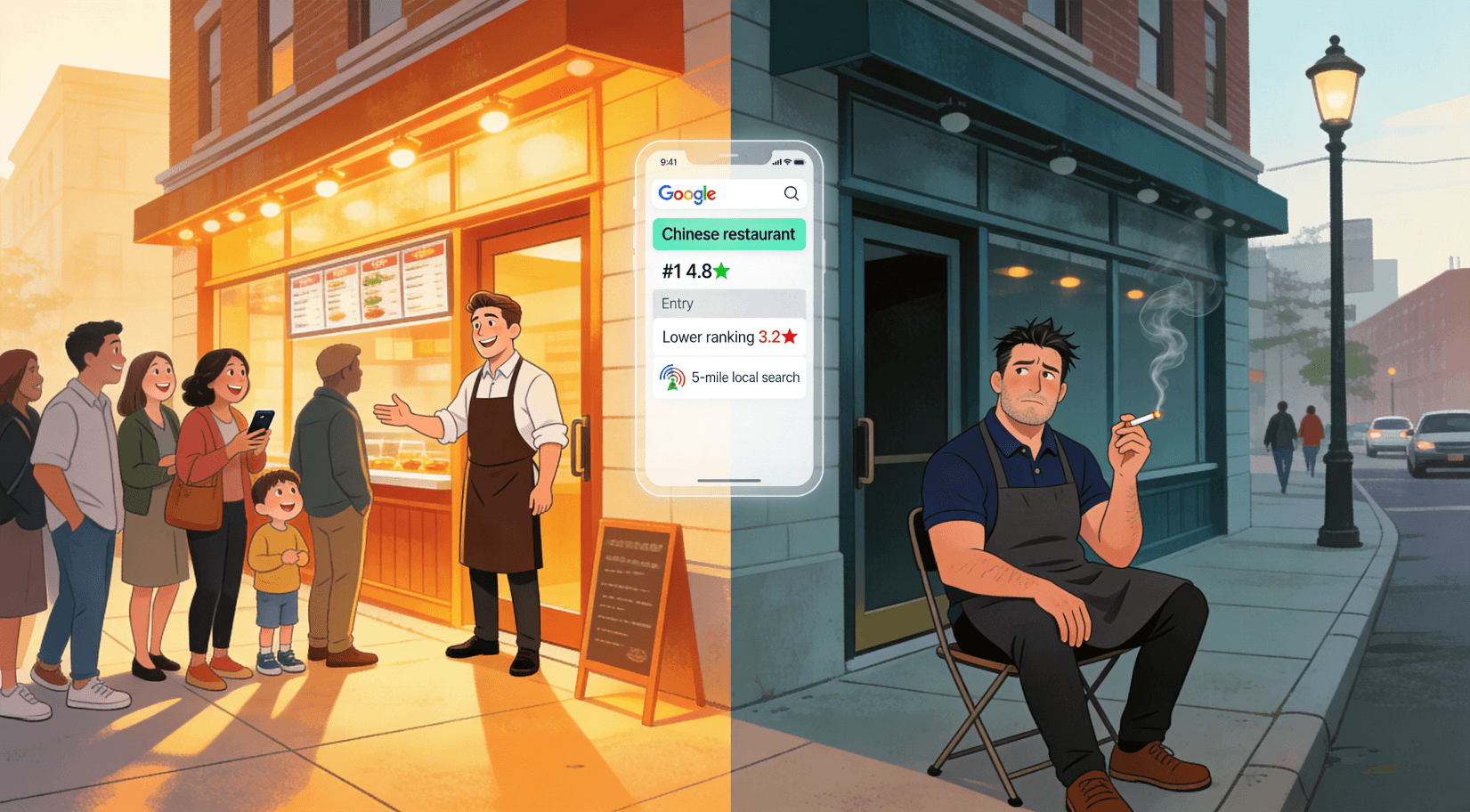
Diners compare before they commit
Restaurant discovery in 2026 still starts with a nearby search, but it rarely ends on one screen. A guest may open Google Maps, tap two or three restaurants, check hours, skim photos, open a menu, then read recent reviews. Some also glance at Instagram or Facebook to see whether the place still looks active.
That path is short. If hours are wrong, the menu PDF is a year old, or the last photo is from a previous season, the guest often chooses the restaurant that looks easier to trust. Search behavior has not become more forgiving. It has become faster.
For operators, this is an operations problem first. Marketing language cannot fix a closed kitchen that Google still lists as open.
What nearby diners actually check
The details that show up most often in local restaurant decisions are ordinary, and they are easy to let slip:
- Open hours, holiday hours and last seating versus door-close time
- A current menu with prices that match the dining room
- Cuisine categories, service options and the map pin itself
- Recent photos of food, the room and the neighborhood
- Review volume, recency and whether the restaurant replies
- A website that restates the same name, address, phone and hours
Google Business Profile is usually the first surface. Local SEO on the website supports it. Social posts and review replies tell the guest the restaurant is still paying attention.
Recency is a trust signal
Guests do not need daily content. They do need evidence that the restaurant is current. A Google post from this week, a reply to last weekend’s review, and a photo that matches the season do more than a large burst of activity followed by silence.
In 2026, AI-assisted search and map summaries also lean on the same public facts. If the website, Google listing and social bios disagree, machines and people both hesitate. The fix is not a new slogan. It is a weekly operating rhythm: hours, menu, photos, posts and replies.
A practical checklist for operators
Before the next busy weekend, confirm these items in one pass:
- Google hours match the door, including holidays and kitchen close.
- The menu link or photo matches today’s dishes and prices.
- The primary category and attributes describe the restaurant guests actually visit.
- Recent photos show the current room and food, not last year’s specials only.
- New reviews have a reply, even when the note is short and specific.
- The website repeats the same NAP — name, address and phone — as Google.
ForkScale’s resource library covers the same work in more detail, including a local SEO checklist and a guide to optimizing a Google Business Profile.
What ForkScale watches for restaurants
When ForkScale runs monthly operations, the search-behavior lesson is built into the schedule: keep the listing accurate, keep social and reviews moving, and report the work that was actually completed. Restaurants that want a first look can request a free visibility audit or use the limited $9.9 checkup to see which of those surfaces is falling behind.
The restaurants that win the next nearby search are rarely the loudest. They are the ones whose public information is true, current and easy to act on.